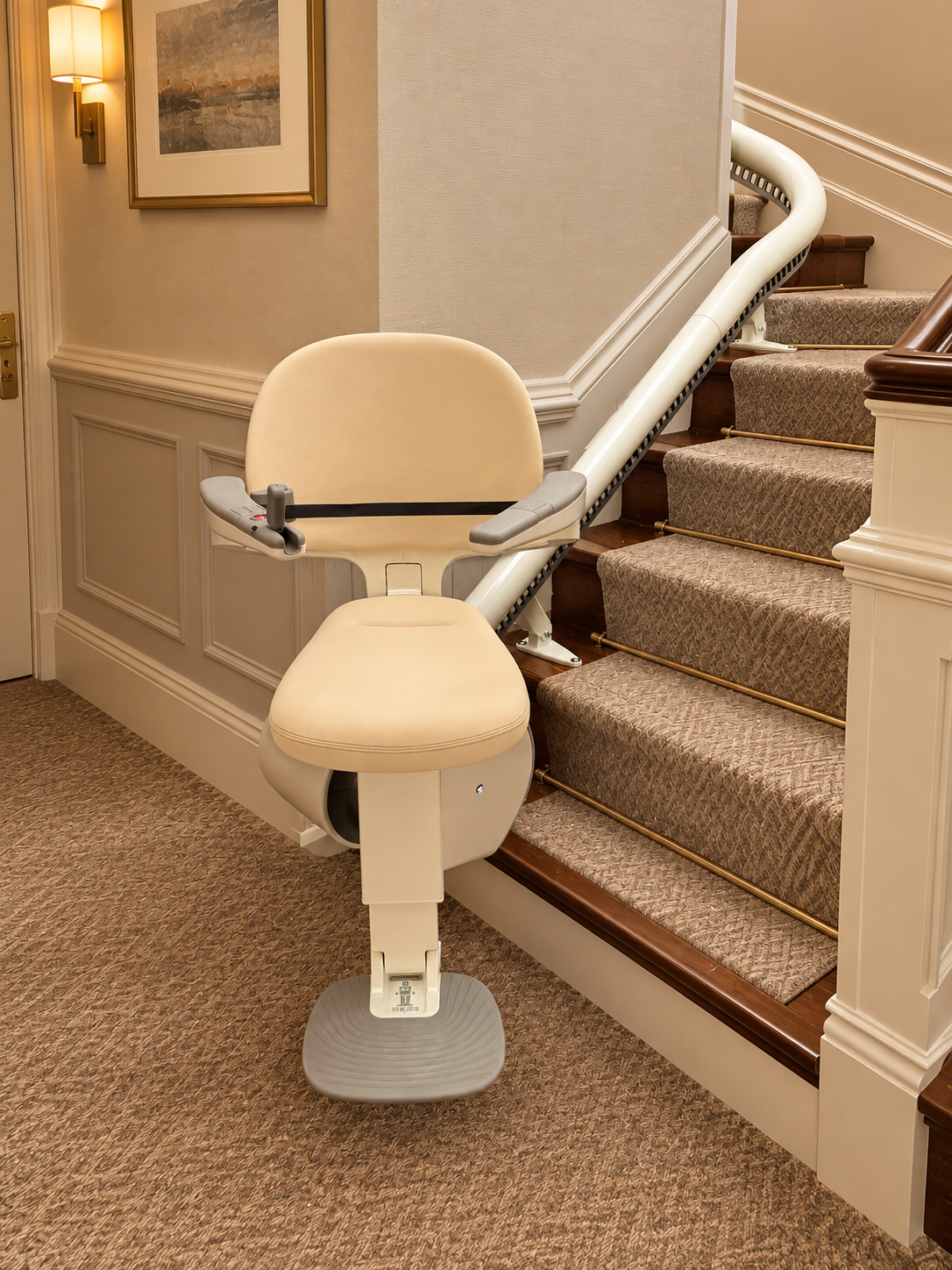
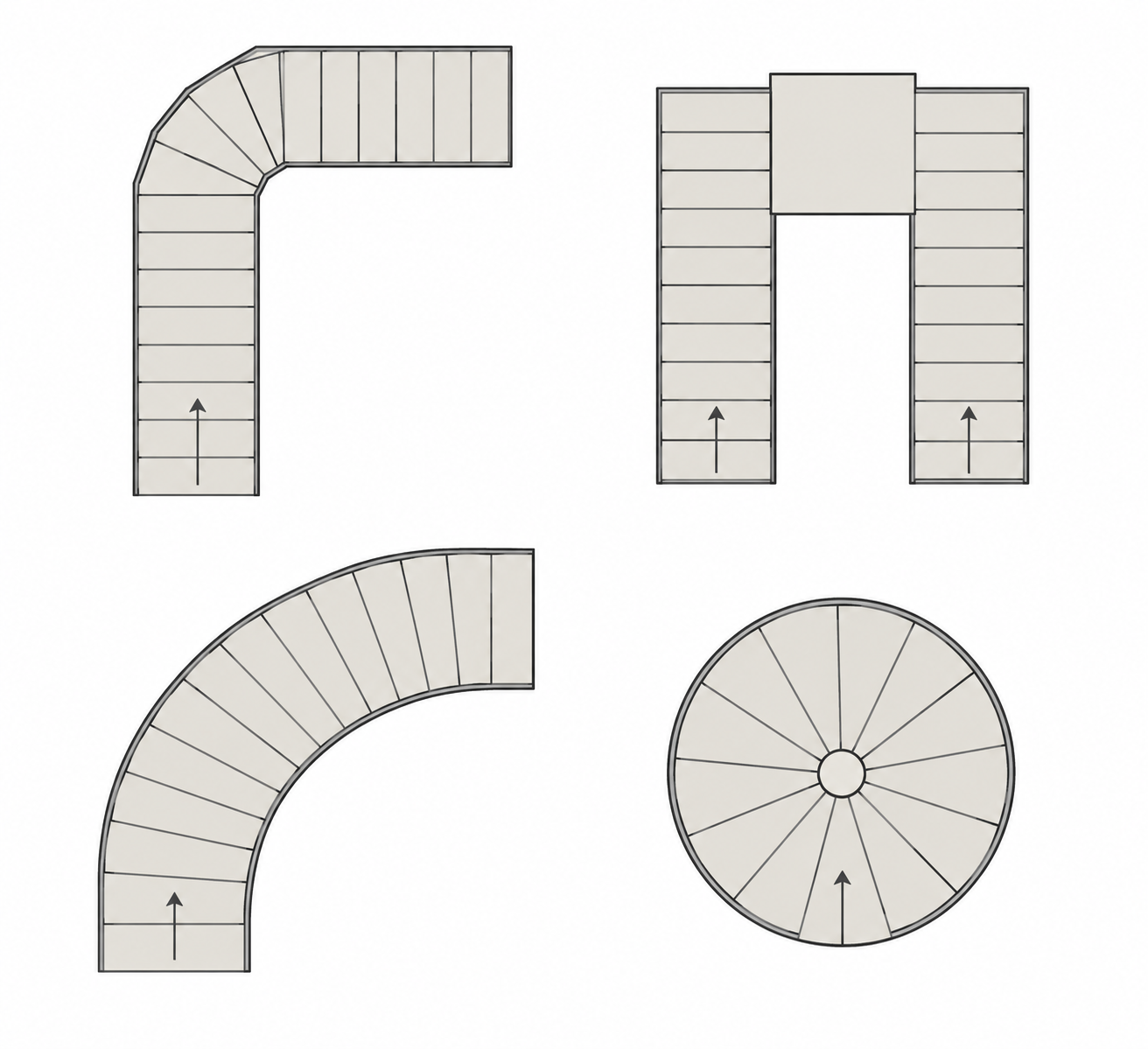
A staircase with a bend, turn or intermediate landing can make choosing a stairlift feel complicated. A straight stairlift follows a single uninterrupted flight, while a curved stairlift needs a rail designed to match the shape of the stairs. For homes where the staircase changes direction, the Flow X offers a tailored solution designed to combine smooth travel, user comfort and a discreet appearance.
The Flow X is an Access BDD stairlift available for curved staircases. Its made-to-measure rail is planned around the layout of the individual staircase, so the lift can follow bends and turns from one floor to another. A home assessment is essential: the staircase, available space, access at the top and bottom, and the user’s needs all affect the design and final configuration.
Designed for stairs that turn
The main difference between a straight and curved stairlift is the rail. A straight rail is designed for a staircase that runs in one direction. A curved rail must be shaped to follow the particular bends and landings in a home. This can make the Flow X a useful option for staircases where a standard straight model would not provide a suitable route.
The Flow X uses a single-rail design. On suitable staircases, this can allow the rail to sit close to the steps and keep more of the staircase available for other people to use. The manufacturer’s product information describes its Advanced Swivel and Levelling (ASL) technology as allowing the chair to rotate while it travels. This can help the lift negotiate tighter layouts; the exact suitability depends on the staircase and should be confirmed during a survey.
What is ASL technology?
On many stairlifts, the seat swivels at the top or bottom so that the user can get on or off facing away from the stairs. Flow X’s ASL system is designed to coordinate the seat’s rotation and levelling as the lift moves around a bend. The user manual explains that the chair is programmed to travel in a position suited to the route, while staying level as the rail changes angle.
This movement can be especially helpful on a narrow or winding staircase, where a fixed travel position may not provide enough clearance. It is also intended to make the journey feel continuous, without separate stops to swivel at every turn. Whether this feature is appropriate for a particular user and staircase is something to check as part of the design and demonstration.
Comfort and ease of use
A stairlift needs to be comfortable for everyday journeys, not just technically capable of climbing the stairs. The Flow X includes a padded seat and backrest, with adjustable seat and footrest positions to help an installer set it up for the user. Its armrests are shaped to provide support when sitting down and standing up, and the integrated joystick is designed to be simple to operate.
A seatbelt and safety features such as obstruction sensors are important parts of a stairlift’s everyday use. The Flow X product information describes a one-handed seatbelt and safety detection that prevents operation unless the belt is fastened. The exact equipment and options can depend on the chosen specification, so they should be confirmed in the quotation.
The chair and footrest can fold away when the lift is not in use. This helps reduce how much space the stairlift occupies, although the amount of room left for other stair users will depend on the staircase and installation. Options such as powered folding may also be available for some configurations.
A stairlift that suits the home
A stairlift becomes part of the home, so appearance matters alongside function. Flow X offers a contemporary design, with choices of upholstery and rail finishes depending on specification. The slim rail and folding chair are intended to keep the installation as unobtrusive as possible.
A curved stairlift is made to measure, so planning is a key part of the process. During a home survey, an installer can assess the shape and width of the stairs, the position of doors and landings, and where the user will get on and off safely. They can also discuss the user’s mobility, preferred controls, and whether features such as powered swivelling or folding would make daily use easier.
Battery operation and power cuts
Flow X is battery-operated, with charging points fitted along the rail so that the batteries can recharge when the lift is parked. This means the lift is not simply dependent on a live mains supply for every journey. The charging arrangement and the way a specific installation behaves during a power interruption should be explained by the installer, along with any relevant operating instructions.
Like any stairlift, the Flow X needs to be used in line with its manual and maintained according to the manufacturer’s recommendations. Users should be shown how to call and send the lift, fasten the seatbelt, fold the chair and footrest, and respond if the lift stops.
Is the Flow X right for your staircase?
The Flow X may be worth considering if you need a curved stairlift for a staircase with bends, a landing or a tighter layout. Its ASL technology, made-to-measure rail and folding design offer useful features, but no product should be recommended without checking the home and the user’s needs.
A professional survey gives you the chance to see how the proposed rail would fit and to ask practical questions before making a decision. A demonstration can help you understand the controls and seating position. It is also sensible to ask what is included in the quotation, which features are standard or optional, and what servicing and aftercare are available.
At Anglian Lifts, we can assess your staircase and talk through whether a Flow X curved stairlift is a suitable option for your home. The right recommendation starts with understanding how you use your stairs, what space is available and what will make each journey feel safe and comfortable.
Contact us today if you require further information or a no-obligation quotation!!
Product features and available options may vary by configuration. Suitability, specification and installation details should be confirmed during a home assessment.