The Lifting Operations and Lifting Equipment Rules (1998), or LOLER, is the UK government’s regulations for persons and companies who own, operate, or manage all forms of lifting equipment. A LOLER Inspection is required so that lifting equipment is suitable and kept safe for use. It’s part of the Health and Safety at Work Act 1974.
So, if you’re a commercial property owner with a lift at your facility, it’s crucial to understand the importance of a LOLER inspection. We’ve made this guide to help you with all you need to know!
What is a LOLER Inspection?
Simply put a LOLER inspection is a thorough examination of lifting equipment by a competence person to make sure the lift is safe and suitable for the job. Any issues or potential issues must be reported to the responsible individual within the organisation and the relevant enforcing authority.
A ‘competent person’ is required to plan all lifting operations according to LOLER rules. Lift operations must be carefully monitored and safely executed. Employees must be trained to use lifting equipment, locations thoroughly inspected, and any lifting activity must be carefully planned by a trained expert.
When a company needs lifting equipment to fulfil their job or service it falls under the Provision and Use of Work Equipment Regulations 1998 (PUWER). These regulations are broad and cover many different types of equipment that are used at a work. PUWER requires all equipment is safe for the job they’re designed for, is used by trained personnel, maintained correctly and accompanied by the right health and safety measures.
In summary, all lifting equipment must satisfy PUWER and LOLER regulations.
How Often Should LOLER Inspections Be Performed?
It’s vital that your lift inspections are performed on a regular basis in order to comply with LOLER regulations.
Employers are advised by the HSE on how often they should occur: Every year, two inspections are required for any equipment that moves people.
- Every 6 months (maximum) for lifting equipment and any associated accessories used to lift people
- Every 6 months for all lifting accessories
- Every 12 months for all other type of lifting equipment. Lifts that transport only cargo need just one inspection per year.
- More thorough investigations should be performed if significant modifications are to be made to a lift.
If defects or issues arise with lifting equipment that could stop it from working correctly then they need to be properly reported and recorded.
The faster any issues get resolved the lower the risk of injury to any personnel and the less downtime incurred for the machine.
Who is responsible for LOLER Compliance?
The directors of the company which owns the powered access equipment are ultimately responsible for LOLER compliance. These persons referred to as “duty Holders” are responsible for regular maintenance and repairs of lifts as well as LOLER inspections.
Failure to keep up your LOLER requirements could result in fines or imprisonment.
Why Are LOLER Inspections Necessary?
Simply put, a thorough LOLER examination and a good set of records are a legal requirement. They are part of your obligation as an employer.
What Lifting Equipment Is Covered By LOLER?
LOLER regulations cover a variety of lifting equipment across many sectors. It also governs any lifting equipment, such as fibre, rope, chains, hooks, slings, and eyebolts. Below is a non-exhaustive list.
- Home Lift
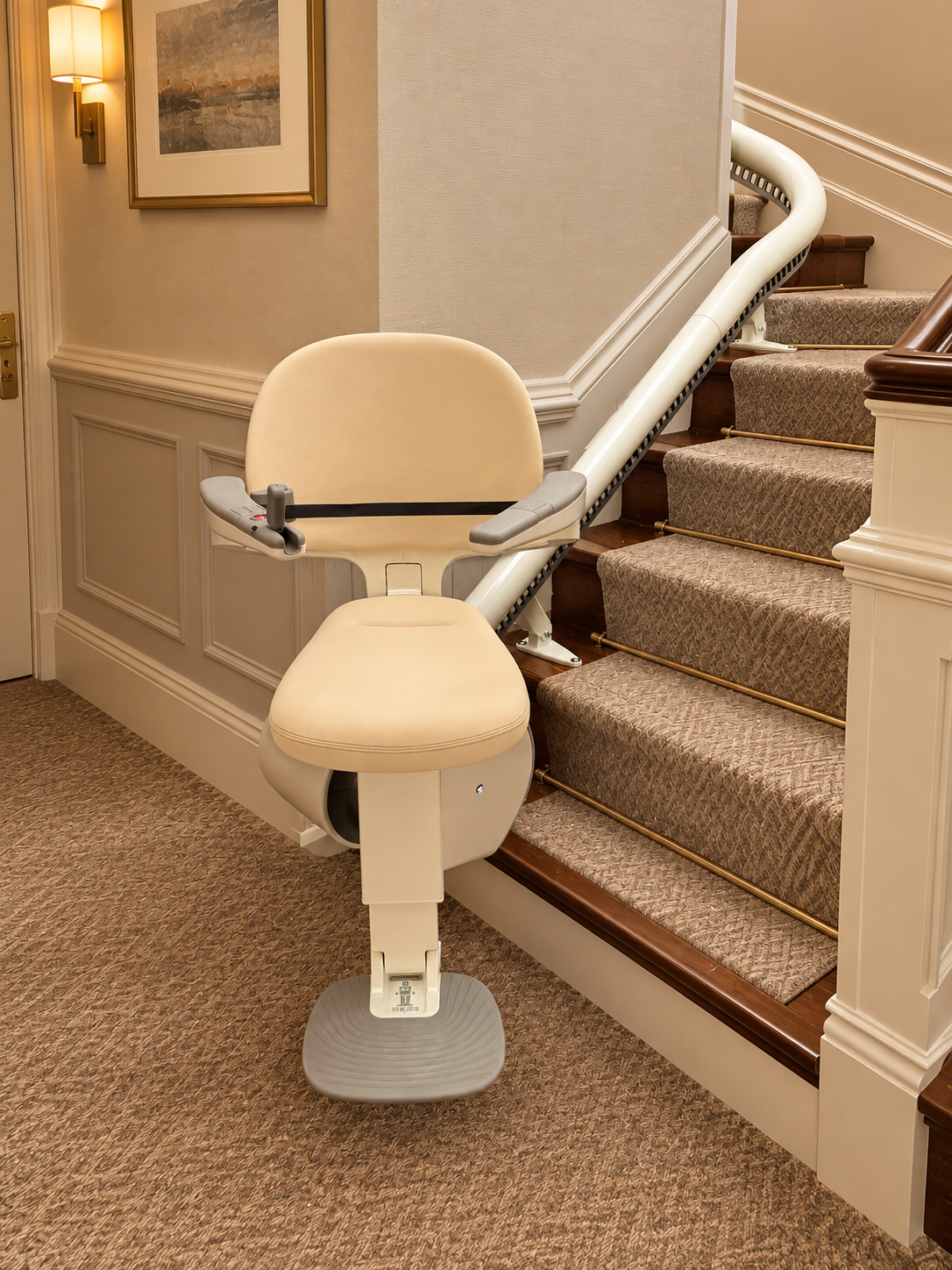
- Stairlift
- Passenger Lift
- Patient Hoist
- Platform Lift
- Construction Hoist
- Goods Lift
- Mobile Elevating Work Platform
- Scissor Lift
- Service Lift
- Vehicle Tail Lift
- Motorcycle Lift
Lift Types We Inspect
Incline Platform Lifts

Through-floor Lifts

Platform Lifts

Stairlifts

Who Is Allowed To Conduct A LOLER Inspection?
According to the HSE, a competent person is ‘Someone who has enough technical and practical experience of the lift to be able to identify any faults and evaluate how important they are’. Therefore you need be confident that the person you choose is suitable and qualified to assess the significance of any faults with the equipment, as well be able to evaluate any faults in light of its continued safe operation.
It’s critical to remember that the person who performs the inspection must be autonomous and unbiased so that decisions aren’t based on personal or business interests.
The Health and Safety at Work Act states: Failing to fulfill the LOLER inspection protocol will put the owners’ employees and consumers at financial risk, imprisonment, or serious injury or death.
The owners and operators of lifting equipment are also liable for training personnel to operate the machines safely and for keeping them in good working order.
Our engineers that perform LOLER inspections have certifications and specialist knowledge on stairlifts, homelifts, scissor lifts and work place elevators. Our team can carry out inspections on all makes within the catagories mentioned.
How To Get Ready For a LOLER inspection
If you’re next inspection is due then here’s a hand list to help you prepare.
- Have the previous LOLER inspection documentation as well as the lift equipment details and repair history.
- Try where possible to have the lift cleaned so any defects or damage can be easily spotted.
- Make all accessories available for inspection at the same time as the main lift
- Provide access to the lift and ensure there is space for an inspector to see all sides of the lift.
- Plan to take the lift out of service for a period of time sutiable for an inspection.
If you have any questions about the points above, feel free to give the team a call.
What is included in a LOLER Inspection?
Below is a general overview of our inspection criteria. More detailed information can be found on specific lift inspection service pages.
A thorough examination of a low level access platform will include:
- Structural integrity check of the lift
- Functional checks of all features, including emergency lowering
- Wear and tear assessment including damage.
- Assessing whether the lift is certified for use (ie: CE mark)
3 Principles of a LOLER Inspection
The three aims of LOLER inspections are:
- Lifting equipment or people is properly planned for and executed.
- The equipment is used in a safe manner.
- A thorough inspection of the lifting equipment is done at suitable intervals by a competent person
Operating staff and qualified employees must conduct three levels of inspection.
- Before-use, LOLER visual examinations are performed before the equipment is used to lift. The equipment and its components are inspected visually, as well as for defects or damage that may endanger safe operation.
- Operational maintenance examinations are carried out when the equipment is in use and subjected to various loads, including those that might potentially cause injuries or accidents.
- All equipment must be inspected in a systematic and thorough manner to guarantee that any flaws are detected.
The inspector must notify you immediately when a defect is discovered that may cause harm. You have a duty to promptly address any hazards by ensuring the problem, is visible and no worker uses the equipment until it has been fixed.
It is strongly advised that you take time to record the flaw – even if it is fixed immediately – under LOLER guidelines. This is to allow you to keep a good record of all equipment testing and faults in the event they reappear in the future. This will ensure that the equipment’s usage remains risk-free throughout its life cycle.
How to Store Records Under The LOLER Guidelines?
LOLER regulations require detailed record-keeping. They require you demonstrate that an inspection took place. In addition, you must keep two types of documents.
- The EC Declaration of Conformity (DoC) (it is curently UKCA).
- Records of inspection.
LOLER inspection reports should be retained for the lifetime of the equipment. , in addition to thorough examination reports if one lacks the DoC. After examination, reports that include lifting accessories should be kept for two years.
The Machinery Directive requires that lifting equipment meets its requirements, and the EC Declaration of Conformity – soon to be UKCA DoC – is a statement to verify this. For the life of the equipment, the owner should keep this document.
Lastly, ongoing inspections are often based on manufacturer instructions and guidelines. More frequent in-service inspections should be performed in order to identify flaws and problems early. These reports should be saved until the next inspection, which will replace them.
Why Choose Anglian Lifts As Your LOLER Inspection Company?
Our team have over 20 years of combined expertise in lift equipment installation, repair, inspection and testing. The team are trained by the brands we sell and we have LOLER certifications.
Anglian Lifts’ LOLER inspection service specialises in stairlifts, passenger lifts, and wheelchair platform lifts.
We can inspect your lift equipment for flaws and make any required adjustments or repairs to make sure it is safe to use and therefore passes the LOLER inspection.
Anglian Lifts ensure to provide services promptly, proficiently, and in compliance with LOLER rules, health and safety standards, and industry best practices.
Accreditations and memberships.
In addition, we provide a variety of services to help you keep equipment safe throughout its life cycle.
The benefit of choosing Anglian Lifts to carry out lift examinations:
- Flexible visits that minimise disruption
- Examination renewal reminders aligned with equipment type and use
- Thorough inspections ensuring quality and compliance
- Comprehensive reports which you can simply drop into your HSE document store
- Get a quote
Arrange a LOLER Examination
Get in touch with our team to discuss your LOLER inspection work. We cover the midlands from Birmingham to Norwich and North London to Nottingham. Contact us today if you need help with your LOLER inspection requirements. Our industry experts are on hand to discuss your needs.