Installing a home lift is becoming increasingly popular across the UK, particularly as more homeowners look for ways to improve accessibility, futureproof their property, or simply add a touch of comfort and luxury. As the demand for domestic lifts grows, so too does the importance of understanding the safety regulations for home lifts that govern their design, installation, and ongoing maintenance.
Whether you’re researching a future installation or preparing to place an order, having a clear understanding of the rules ensures your lift is safe, compliant, and built to last.
This detailed 2025 guide breaks down the key regulations, standards, and requirements surrounding home lifts in the UK — in a way that’s easy for homeowners to understand.
1. Home Lifts vs. Platform Lifts: Why Safety Regulations For Home Lifts Differ
Before diving into compliance and standards, it’s essential to clarify the difference between the two main types of residential lifts — because they fall under different regulatory frameworks.
Home Lifts (Enclosed Cabin Lifts)
These operate more like traditional passenger lifts, with a fully enclosed cabin, automatic or manual doors, and a guided shaft or supporting metal structure. They typically use drive systems such as cog-belt, hydraulic, traction, or vacuum technology. Home lifts are engineered to offer a smoother, quieter ride and come with a range of safety features comparable to commercial lifts.
Platform Lifts
Platform lifts, which include through-floor lifts and step lifts, operate under the slower “constant pressure” principle. Instead of fully enclosed cabins, they use perimeter safety systems and are designed to help users travel short distances vertically.
Despite these functional differences, both categories must meet stringent UK safety regulations.
2. The Legal Framework: UK Supply of Machinery (Safety) Regulations 2008
The primary legislation governing residential lifts in 2025 is the UK Supply of Machinery (Safety) Regulations 2008, which were carried over after Brexit and now work alongside the UKCA marking system.
Under these regulations, manufacturers and installers must ensure that:
- The lift is designed and constructed safely
- Risk assessments are carried out before installation
- Instructions and safety documentation are provided
- The lift meets essential health and safety requirements
- All electrical and mechanical systems comply with UK standards
- The product is CE and/or UKCA marked depending on the transition period
This legal framework is what ensures domestic lifts aren’t just functional — they meet a minimum baseline of safety for everyday use.
3. EN 81 Standards: The Technical Backbone of Lift Safety
Alongside legal requirements, British and European Standards provide technical guidance on how lifts should be designed and installed. These standards aren’t laws, but manufacturers and installers follow them to demonstrate compliance with UK safety legislation.
Key standards for 2025 include:
EN 81-41 — Safety Rules for Vertical Lifting Platforms
This is the most relevant for through-floor lifts and platform lifts used in home environments. It covers:
- Structural strength
- Guarding
- Maximum speed
- Emergency features
- Controls
EN 81-20 and EN 81-50 — Lift Safety and Design Requirements
These are used more commonly for enclosed cabin lifts and cover everything from emergency communications to door protections and shaft requirements.

BS EN 81-42 — A newer standard for certain categories of home lifts
This standard supports safer, more modern lift designs and aligns well with the advanced technologies being used in 2025 home lift models.
While homeowners rarely see these documents, choosing an installer who follows these standards ensures your lift is built to a recognised safety benchmark.
4. Building Regulations: Your Property Must Also Comply
A lift installation isn’t just about the lift — it affects the structure of the property. That’s why several parts of UK Building Regulations apply.
Part M — Accessibility
Ensures users can access the lift safely, with proper door widths, clear landings, and appropriate manoeuvring space.
Part B — Fire Safety
Covers fire separation, fire-resistant shaft materials, smoke control, and safe evacuation routes around the lift area.
Part A — Structural Stability
Ensures the building can handle the weight and forces applied by the lift, shaft, support frame, and machinery.
Part P — Electrical Safety
All wiring, power supplies, and electrical installations must meet certification standards.
Many homeowners worry this part is complicated, but a reputable installer — like Anglian Lifts — will manage compliance, liaise with building control, and provide all necessary documentation.
5. Essential Safety Features Every 2025 Home Lift Should Include
Modern home lifts come with advanced safety features that go far beyond the minimum legal requirements. A compliant lift installed in 2025 should include:

- Emergency lowering (manual or automatic) in case of a power failure
- Safety edges and light curtains to detect obstructions at entry points
- Door interlocks preventing unintended opening
- Overspeed protection to control cabin descent
- Load sensors to prevent overloading
- Auto-levelling technology for smooth floor-to-floor travel
- Battery-backed emergency lighting and alarms
- Emergency stop controls accessible within the cabin
Many modern electric cog-belt lifts, such as TKE Altura models, offer exceptionally smooth travel, energy efficiency, quiet operation, and advanced diagnostics — all contributing to safer, more reliable operation.
6. Ongoing Servicing: A Key Part of Staying Safe and Compliant
Although private homes aren’t legally required to have lifts inspected at set intervals (unlike commercial premises), regular servicing is essential for safety, warranty, and performance.
A typical service will check:
- Batteries
- Sensors
- Door locks
- Drive systems
- Electronics and control boards
- Lubrication
- Wear and tear
This is where service tiers like Bronze, Silver, Gold, and Diamond come into play, offering tailored levels of preventative maintenance to keep lifts operating safely for years.
7. Why Choosing the Right Installer Matters More Than Ever
Compliance doesn’t stop at choosing a lift — the installer plays a huge role. A trained, certified installer will:
- Ensure the lift is installed safely and correctly
- Provide commissioning and safety testing
- Issue conformity documentation
- Manage building regulation approval
- Deliver a full user handover and training
- Offer long-term service and support
This is where experienced specialists like Anglian Lifts excel, combining technical knowledge with industry-leading training and customer-focused service.
Stairlift Regulations in the UK (2025)
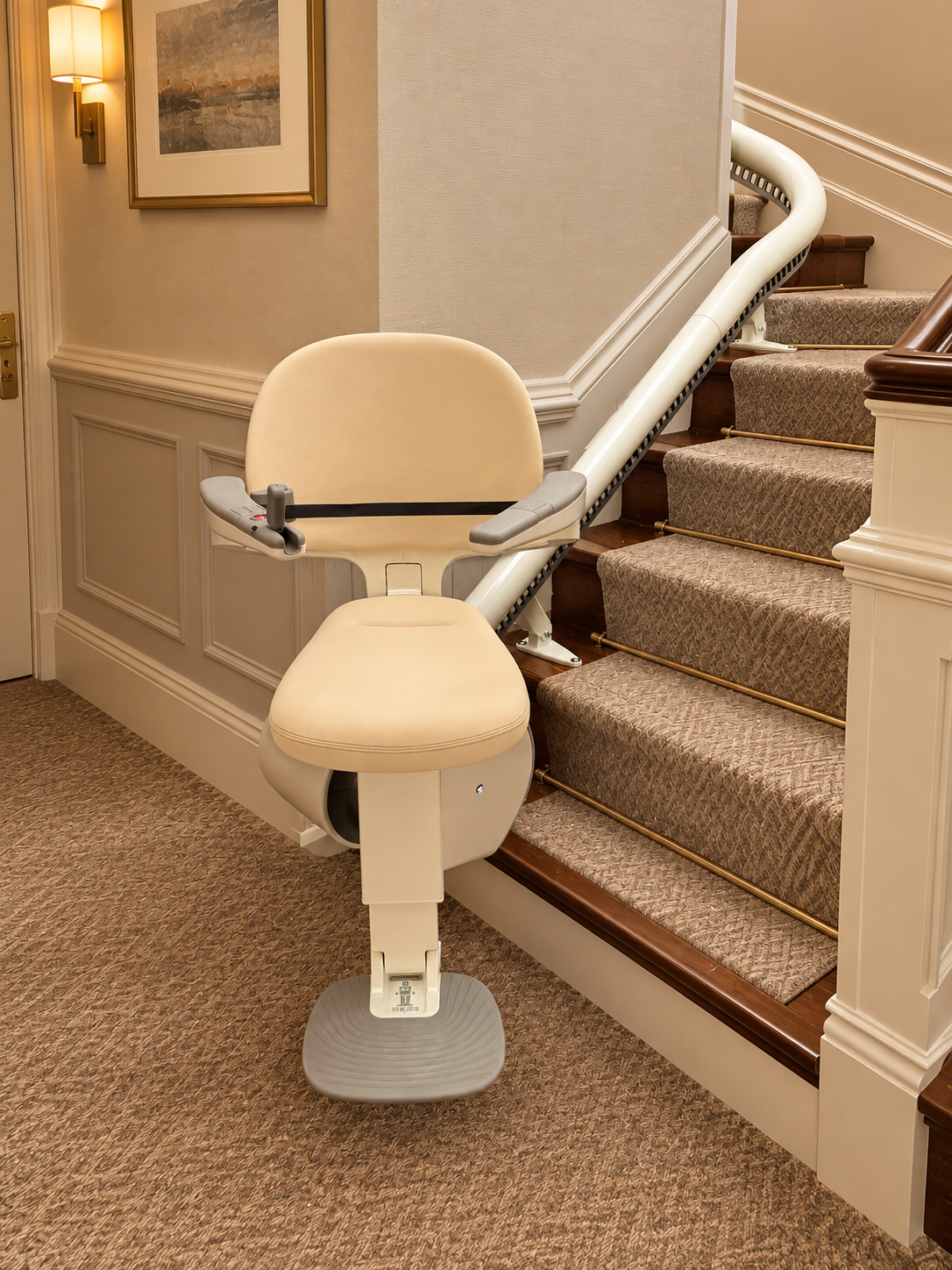
While stairlifts are not classified the same way as home lifts, they are still governed by important safety standards to ensure reliable operation in private homes. In the UK, stairlifts must comply with the UK Supply of Machinery (Safety) Regulations 2008, as well as the harmonised standard BS EN 81-40, which specifically covers stairlifts and inclined platform lifts. These regulations require features such as over-speed protection, reliable braking systems, obstruction sensors, battery backup operation, and safe stopping mechanisms. Every stairlift installed must undergo a full risk assessment and be supplied with clear user instructions and conformity documentation. Proper installation and regular servicing are essential to maintain safety — ensuring the stairlift continues to meet the performance and protection standards set out in the regulations.
Final Thoughts
Home lift safety regulations in the UK are designed to protect homeowners, ensure reliability, and support the long-term performance of every installation. While the rules and standards can appear daunting, the right installer will guide you through the entire process — from design and compliance to installation and maintenance.